

Macro photography demands precise focus right away because even tiny shifts can blur your shot. A tripod or solid support helps keep the camera steady while reducing motion in your subject makes sharp results easier. Manual focus, Live View magnification, and focus peaking give you better control over exactly where detail lands. Keep your aperture around f/8, and use focus stacking for extra sharpness across the frame.
Stabilize Your Camera for Macro Photography
Because even the tiniest shake looks huge in macro photography, your initial job is to make your body as steady as possible before you press the shutter. Plant your feet, tuck your elbows into your sides or knees, and hold the camera with both hands. These grip techniques turn your body into a support system you can trust.
Next, switch to manual focus in case autofocus starts hunting. Set the focus ring near the magnification you want, then gently rock your body forward and back. Press the shutter at the instant your subject snaps into focus.
Provided you need more support, try tripod alternatives like bracing against a wall, resting on a bag, or kneeling low. You don’t need fancy gear to feel capable here. With practice, your hands and eyes start working like a team.
Reduce Subject Movement for Sharper Macro Photos
Steady hands help a lot, but your subject can still ruin a sharp shot with one tiny twitch. In macro work, even a breeze or a crawling leg can throw focus off. That happens to all of us, so don’t feel behind.
Start with environmental control. Block wind with your body, a diffuser, or a small card. Work in the early morning during insects move slowly and flowers stay calm.
Then use gentle subject restraint only at the time it’s safe and ethical. Support a stem with a clamp, or wait for pauses in movement instead of forcing the scene.
As you settle in, keep your body anchored and rock slightly to catch the sharp moment. With patience, you’ll feel more connected to the process and come home with cleaner, crisper close-ups every time.
Choose the Right Aperture for Macro Photography
As you move into aperture control, you’ll notice that depth of field becomes one of the biggest challenges in macro photography. At close range, even tiny shifts can blur crucial details, so you’ll usually get better results through stopping down. Start around f/5.6 to f/8, where many macro setups balance sharpness and light well.
From there, adjust based on your subject and your lighting. Should you need more of the insect, petal, or texture sharp, try f/11 to f/16. Smaller apertures give you more room for error and stronger exposure control, especially whenever you add flash.
In contrast, wide apertures can look dreamy, but they often leave only a sliver in focus. As you practice, you’ll find the aperture range that helps your close-ups feel crisp, confident, and beautifully yours.
Use Manual Focus for Better Macro Precision
Once autofocus starts to hunt, you’ll get better results through switching to manual focus and fine-tuning the focus ring yourself.
For even more precision, use Live View so you can magnify the scene and see exactly where sharp focus lands. It takes a little patience, but you’ll feel more in control and catch those tiny details that make macro shots shine.
Fine-Tune Focus Ring
Because macro shots magnify every tiny shake, manual focus often gives you far better control than autofocus, which tends to hunt at 1:1 magnification.
To fine-tune the focus ring, treat it like a precision tool, not a steering wheel. Small turns matter, especially whenever ring sensitivity feels high and your subject barely stays still.
- Set the ring near your needed magnification initially.
- Make tiny adjustments whilst holding the lens steady with both hands.
- Check your focus calibration by watching the sharpest detail, like an eye or petal edge.
- Pause your breathing, then press the shutter at the exact crisp moment.
As you practice, your fingers learn the lens’s feel, and that confidence connects you with other macro shooters who know sharp focus is earned, not guessed, in the field.
Focus With Live View
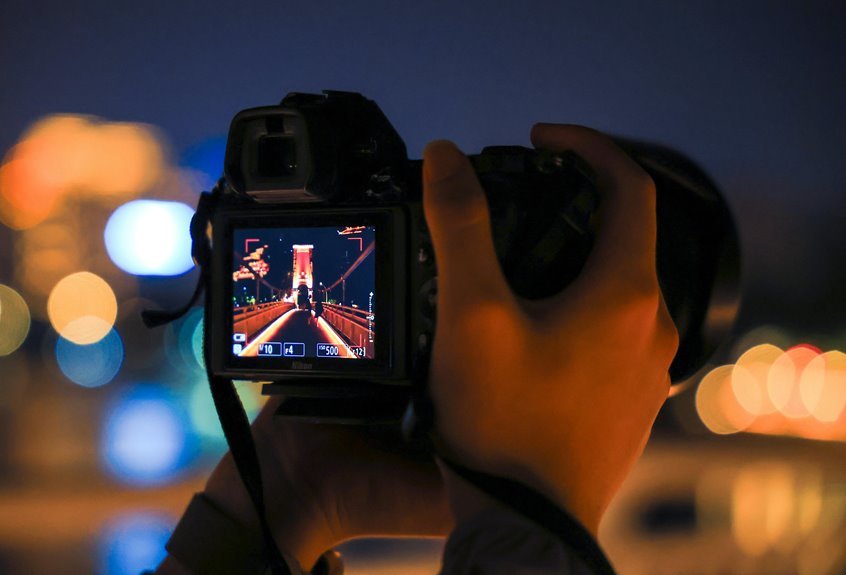
Switch on Live View and magnify the preview so you can judge focus with far more care than the viewfinder usually allows at macro distance. At the point autofocus starts hunting, switch to manual focus and trust what you see on the screen. Use magnified focus to inspect tiny details like hairs, pollen, or an insect’s eye.
Next, steady yourself so your whole setup feels connected and calm. Hold the camera with both hands, tuck in your elbows, and use focus assist tools like focus peaking to highlight sharp edges.
Then set the ring near the right distance and gently rock your body forward and back. Fire at the instant the crucial detail snaps crisp in live view. This method helps you feel in control, and that’s where many close-up keepers begin to happen more often.
Focus on Your Subject’s Key Detail
Now that you’ve switched to manual focus, pick the one detail that matters most and make it your focal point.
In macro shots, that often means keeping the eyes crisp or letting a strong texture carry the image.
Then clean up the frame so bright spots, messy backgrounds, or extra elements don’t pull attention away from your subject.
Identify The Focal Point
During the moment you shoot macro, your initial job is to decide what must look sharp, since close-up photos have so little depth of field. Once you choose one clear detail, your whole image feels stronger and more intentional.
That choice helps you belong to the group of photographers who shoot with purpose, not luck.
Use this simple checklist:
- Pick the feature that tells the story best.
- Remove distracting background elements from around it.
- Use lighting contrast to guide attention toward it.
- Adjust your position until that detail stands apart.
As you frame, ask yourself what viewers should notice primarily. Then commit to that choice.
Provided your subject has several interesting parts, don’t chase them all. You’ll get a cleaner, more confident photo whenever one detail leads and everything else supports it well.
Emphasize Eyes Or Texture
Because macro depth of field gets so thin, the detail you focus on has to earn its place, and in most shots that means the eyes on an animate subject or the strongest texture on a still one.
At the moment you lock onto that key detail, your photo feels intentional, and you instantly create a stronger connection with viewers who want to feel close to the subject too.
For living subjects, aim for eye highlighting. Get to eye level, steady yourself, and make the nearest eye crisp initially. That sharp eye gives the whole frame life.
For flowers, shells, bark, or fabric, lean into texture improvement. Align your focus plane with the surface so ridges, fibers, and patterns read clearly. Then your image doesn’t just look sharp. It feels welcoming, tactile, and part of the shared macro world.
Eliminate Distracting Elements
At the moment your frame gets tight, every bright speck, messy edge, or soft shape behind the subject starts fighting for attention, so you need to strip the scene down to the one detail that matters most.
In macro work, you belong with photographers who simplify on purpose.
- Shift your angle to push background clutter into darker, cleaner areas.
- Move leaves, stems, or crumbs before shooting, so the subject stands alone.
- Watch edges closely, because half-shapes and bright corners steal focus fast.
- Check for distracting reflections on petals, shells, or wet surfaces, then change light or position.
Next, keep your subject’s strongest feature, like an eye or texture, on the same plane you’ve chosen.
At the point the scene feels calm, your focus looks stronger, your story feels clearer, and your close-up finally feels like yours.
Use Focus Stacking for Full Macro Sharpness
Try focus stacking in case one shot just can’t hold enough detail from front to back. In macro work, your depth of field gets razor thin, so you capture several frames with small focus shifts. Then you combine them through image blending for smooth, natural detail across the subject.
Consider it as sharpness layering that helps your photo match what your eyes wanted to see.
To make it work, keep your camera steady, use manual focus, and move the focus point in tiny steps from the nearest edge to the farthest detail. Use a smaller aperture, but don’t stop down so far that softness creeps in.
Provided your subject stays still, stacking helps you create polished close-ups that feel complete. You’ll join many macro shooters who rely on this method whenever one frame simply isn’t enough.
Frequently Asked Questions
Can I Shoot Macro Photos Without a Dedicated Macro Lens?
Yes, you can shoot macro photos without a dedicated macro lens by using extension tubes or reversing a lens. Focus manually, keep the camera steady, and try apertures around f/5.6 to f/8 for crisper close up shots.
How Close Should I Get to My Subject?
Move in until you reach the closest distance your lens can focus, then stop just short of pressing into the scene. Step back a touch to keep shapes natural, and match your camera angle to the same plane as the subject so the finest details remain crisp.
What Backgrounds Work Best for Macro Photography?
For strong macro photos, use backgrounds that stay soft and out of focus so attention stays on the subject. Simple colors or gentle tones usually work well, especially when they support the subject’s shape, texture, or feeling. A clean, non distracting background helps the final image look intentional and visually unified.
Should I Shoot Macro Images in RAW or JPEG?
Shoot macro images in RAW to avoid strong compression and keep more image data. This gives you better control when adjusting exposure, color, and fine detail during editing, which is especially useful for close up subjects where small changes matter.
What Subjects Are Easiest for Beginner Macro Photographers?
Flat, still subjects such as flower details, butterflies, beetles, and small leaves are ideal for beginner macro photographers. These subjects make it easier to control focus, observe fine structures, and gain experience without dealing with constant motion.