

Sony’s best mirrorless cameras for 2026 cover a wide range of needs.
Some are great for travel, some shine in video, and others deliver stunning full-frame images.
Sony gives beginners and pros plenty of strong options.
The right choice comes down to how you shoot and what you want from your camera.
| Sony Alpha a6400 Mirrorless Camera with 16-50mm Lens | 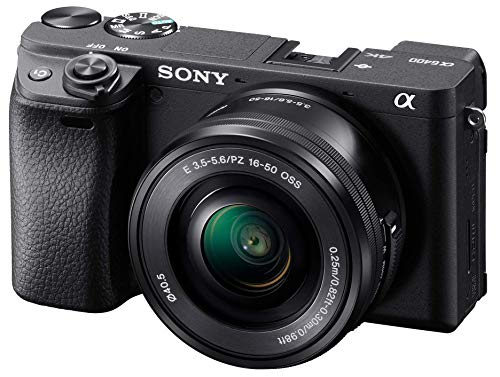 | Best Budget APS-C | Sensor Format: APS-C | Lens Included: 16–50mm kit lens | Video Resolution: 4K UHD | VIEW LATEST PRICE | Read Our Analysis |
| Sony ILCE-7M3K/B a7 III 24.2MP Full Frame Mirrorless Camera w 28-70mm Lens |  | Best Full-Frame Starter | Sensor Format: Full-frame | Lens Included: 28–70mm kit lens | Video Resolution: 4K UHD | VIEW LATEST PRICE | Read Our Analysis |
| Sony Alpha 7 IV Full-frame Mirrorless Interchangeable Lens Camera |  | Best Premium Overall | Sensor Format: Full-frame | Lens Included: Body only | Video Resolution: 4K 60p | VIEW LATEST PRICE | Read Our Analysis |
| Sony Alpha a6400 Mirrorless Camera (ILCE-6400/B Body) | Best Body Only | Sensor Format: APS-C | Lens Included: 55–210mm lens | Video Resolution: 4K | VIEW LATEST PRICE | Read Our Analysis | |
| Sony a6400 Mirrorless Camera with 18-135mm Lens | Best Zoom Kit | Sensor Format: APS-C | Lens Included: 18–135mm lens | Video Resolution: 4K | VIEW LATEST PRICE | Read Our Analysis | |
| Sony Alpha 7R V Mirrorless Camera (Body Only) |  | Best High-Resolution | Sensor Format: Full-frame | Lens Included: Body only | Video Resolution: 8K / 4K | VIEW LATEST PRICE | Read Our Analysis |
| Sony Alpha ZVE10 II Mirrorless Content Creator Camera | Best Creator Camera | Sensor Format: APS-C | Lens Included: 16–50mm lens | Video Resolution: 4K 60 fps | VIEW LATEST PRICE | Read Our Analysis |
More Details on Our Top Picks
Sony Alpha a6400 Mirrorless Camera with 16-50mm Lens
Should you want a compact Sony mirrorless camera that’s strong for both photos and video, the Alpha a6400 is a smart pick. You get a 24MP APS-C sensor, fast hybrid autofocus with 425 phase-detection points, and Real-time Eye AF for sharp results. The included 16–50mm zoom gives you a versatile 24–75mm equivalent range, while 4K UHD, slow motion, and 11 fps burst shooting help you handle action. Its 3-inch tilting touchscreen, Wi‑Fi, and micro-HDMI make shooting and sharing easy, and the 10.3-ounce body travels light.
- Sensor Format:APS-C
- Lens Included:16–50mm kit lens
- Video Resolution:4K UHD
- Autofocus:Hybrid AF
- Screen Type:Tilting touchscreen
- Wireless:Wi-Fi
- Additional Feature:425 phase-detection points
- Additional Feature:180° tilting touchscreen
- Additional Feature:11 fps burst shooting
Sony ILCE-7M3K/B a7 III 24.2MP Full Frame Mirrorless Camera w 28-70mm Lens
The Sony ILCE-7M3K/B a7 III is a strong choice for you provided that you want a full-frame mirrorless camera that balances image quality, speed, and flexibility. Its 24.2MP back-illuminated sensor delivers 14-bit files, 15 stops of tonal range, and an ISO range up to 204,800, so you can shoot confidently in tough light. You also get 693 phase-detection AF points, 10 fps burst shooting, 4K HDR video, and a tilting touchscreen. The included 28–70mm lens gives you a useful everyday zoom, while dual SD slots, Wi‑Fi, Bluetooth, and NFC keep your workflow simple.
- Sensor Format:Full-frame
- Lens Included:28–70mm kit lens
- Video Resolution:4K UHD
- Autofocus:Hybrid AF
- Screen Type:Tilting touchscreen
- Wireless:Wi-Fi / Bluetooth / NFC
- Additional Feature:15-stop dynamic range
- Additional Feature:Dual SDXC slots
- Additional Feature:4K HDR recording
Sony Alpha 7 IV Full-frame Mirrorless Interchangeable Lens Camera
Sony Alpha 7 IV is a strong pick for creators who want one camera that handles both high-end stills and serious video work, thanks to its 33MP full-frame sensor, 4K 60p 10-bit recording, and fast hybrid autofocus. You get 759-point Real-time Eye AF, 5-axis SteadyShot stabilization, and 10 fps bursts for action. Its tilting 3-inch screen, electronic viewfinder, and dual card slots give you flexible shooting. With Wi‑Fi, Bluetooth, HDMI, and USB connectivity, you can move files or stream quickly. The black body weighs 635 g, so it feels solid yet manageable.
- Sensor Format:Full-frame
- Lens Included:Body only
- Video Resolution:4K 60p
- Autofocus:Real-time Eye AF
- Screen Type:Tilting LCD
- Wireless:Wi-Fi / Bluetooth
- Additional Feature:33MP full-frame sensor
- Additional Feature:10-bit 4:2:2 video
- Additional Feature:CFexpress Type A slot
Sony Alpha a6400 Mirrorless Camera (ILCE-6400/B Body)
Built for creators who want speed in a compact body, the Sony Alpha a6400 (ILCE-6400/B) stands out with its 0.02-second autofocus, Real-Time Eye AF, and 11 fps continuous shooting. You get 24.2MP stills, 4K video, and reliable Real-Time Tracking across 425 phase and 425 contrast points. The tilting 3-inch touchscreen and 2.36m-dot OLED viewfinder help you frame shots with confidence. Since it’s body only, you can pair it with E-mount lenses that fit your style. Wi-Fi, Bluetooth, and USB support make sharing easier, and the included NP-FW50 battery keeps you shooting.
- Sensor Format:APS-C
- Lens Included:55–210mm lens
- Video Resolution:4K
- Autofocus:Hybrid AF
- Screen Type:Flip-up touchscreen
- Wireless:Wi-Fi / Bluetooth
- Additional Feature:0.02 sec autofocus
- Additional Feature:Real-Time Tracking
- Additional Feature:Built-in flash modes
Sony a6400 Mirrorless Camera with 18-135mm Lens
If you want a compact mirrorless camera that can keep up with fast action, the Sony a6400 with 18-135mm lens is a strong fit thanks to its 0.02-second autofocus, real-time tracking, and 11 fps burst shooting. You get a 24.2MP APS-C sensor, 425-point phase and contrast AF, and 4K video with slow motion and time-lapse options. The 18-135mm zoom gives you a versatile 27-202.5mm full-frame equivalent range, so you can shoot wide scenes or distant subjects. Its tilting touchscreen, OLED viewfinder, Wi-Fi, and Bluetooth help you shoot and share easily.
- Sensor Format:APS-C
- Lens Included:18–135mm lens
- Video Resolution:4K
- Autofocus:Real-time AF
- Screen Type:Tilting touchscreen
- Wireless:Wi-Fi / Bluetooth
- Additional Feature:18-135mm zoom lens
- Additional Feature:125-minute recording capacity
- Additional Feature:4-second recycle time
Sony Alpha 7R V Mirrorless Camera (Body Only)
With its 61.0 MP full-frame back-illuminated Exmor R CMOS sensor, the Sony Alpha 7R V Mirrorless Camera is a strong fit for photographers who need exceptional detail and flexibility in a body-only, interchangeable-lens system. You get 3:2 framing, a new AI processing unit, and next-generation Real-time Recognition autofocus that helps you track subjects with confidence. Sony’s BIONZ XR engine speeds processing up to 8x faster, so you can work efficiently. You can also capture 8K 24p/25p and 4K 60p video, making this full-frame mirrorless camera a powerful hybrid choice for demanding creative work.
- Sensor Format:Full-frame
- Lens Included:Body only
- Video Resolution:8K / 4K
- Autofocus:Real-time Recognition AF
- Screen Type:Tilting LCD
- Wireless:Not specified
- Additional Feature:61.0MP full-frame sensor
- Additional Feature:AI processing unit
- Additional Feature:8K 24p recording
Sony Alpha ZVE10 II Mirrorless Content Creator Camera
Sony Alpha ZV-E10 II is a strong fit for content creators who want a compact mirrorless camera with serious video and photo flexibility, especially provided you plan to use interchangeable Sony E-mount or FE-mount lenses. You get a 26MP APS-C back-illuminated sensor, 4K at 60 fps, Full HD at 120 fps, and 11 fps burst shooting with AF/AE tracking. The flip-out 3-inch screen helps you frame yourself easily, while Real-time Eye AF and AI tracking keep subjects sharp. You can also use the included 16-50mm OSS II kit lens, plus Wi-Fi, Bluetooth, and USB for quick sharing.
- Sensor Format:APS-C
- Lens Included:16–50mm lens
- Video Resolution:4K 60 fps
- Autofocus:AI-assisted AF
- Screen Type:Vari-angle LCD
- Wireless:Wi-Fi / Bluetooth
- Additional Feature:10 Creative Look presets
- Additional Feature:5x slow motion
- Additional Feature:Windscreen included
Factors to Consider When Choosing a Sony Mirrorless Camera
When you choose a Sony mirrorless camera, start with sensor size because it affects image quality, low-light performance, and depth of field. You should also weigh autofocus speed, video features, lens compatibility, and image stabilization, since each one shapes how well the camera fits your shooting style. By comparing these factors side by side, you can pick a model that matches what you actually need.
Sensor Size
Sensor size plays a big role in how a Sony mirrorless camera looks and performs, because it affects field of view, depth of field, and low-light capability. When you choose APS-C, you’ll get a smaller sensor than full-frame, so the same lens gives you a narrower angle of view and a stronger crop factor. A 16–50 mm lens, for example, acts more like 24–75 mm in 35mm terms. Full-frame sensors, around 35.6 × 23.8 mm, are larger and gather more light than APS-C sensors at about 23.5 × 15.6 mm. That extra area can help you capture cleaner images and support higher resolutions like 24.2 MP, 33 MP, or 61 MP. Select the size that fits your subject, lighting, and framing needs.
Autofocus Performance
Autofocus performance can make just as much difference as sensor size as you pick a Sony mirrorless camera, especially assuming you shoot action, portraits, or video. You’ll want speed, because some Sony bodies lock focus in as little as 0.02 seconds. Look for plenty of autofocus points too; systems range from roughly 425 points to advanced hybrid arrays with 759 or more. Hybrid autofocus blends phase-detection and contrast-detection, which helps you keep subjects sharp as they move. Real-time Eye AF and real-time tracking are especially useful where you need faces or eyes to stay locked. Coverage matters as well, with some cameras covering 84% to 93% of the sensor, and burst rates up to 11 fps help preserve focus in fast scenes.
Video Capabilities
Video capabilities can be a make-or-break factor when you choose a Sony mirrorless camera, especially in case you plan to shoot more than stills. You’ll want 4K recording at 30p or 60p, and 120 fps in Full HD in case you need smooth slow motion or flexible edits. Check for 10-bit 4:2:2 support, since it gives you more color detail and better grading headroom than 8-bit. Look for full pixel readout, oversampling, and no pixel binning to keep your 4K footage sharp and reduce moiré or aliasing. Should you like creative shooting, choose a model with slow/quick motion, time-lapse, and S&Q modes. Also consider microphone-friendly controls, live streaming support, and recording limits for longer takes.
Lens Compatibility
When you’re considering video features against total value, lens compatibility should be one of the initial things you check on a Sony mirrorless camera. You need to match the body’s mount to the lenses you plan to use, because incompatible mounts won’t fit without an adapter. Check whether you’re buying an APS-C E-mount body or a full-frame FE-compatible model, especially if you already own Sony lenses. Also confirm the kit lens range; options like 16–50mm, 18–135mm, or 28–70mm give you different flexibility, while body-only kits let you choose later. Review autofocus and stabilization support in both body and lens, then verify aperture, filter thread size, and zoom range so you know how well the camera fits your subjects, accessories, and low-light needs.
Image Stabilization
Image stabilization can make a big difference, especially whenever you’re shooting at slower shutter speeds, using longer lenses, or recording video manually. You’ll cut blur from hand shake and get sharper results when you’re working without support. Check whether the Sony camera uses in-body sensor-shift stabilization, lens-based optical stabilization, or both. In-body stabilization helps even with unstabilized lenses, while optical stabilization only works with a compatible stabilized lens. That detail matters whenever you swap lenses often. Also, see whether the stabilization covers stills, video, or both, since your needs can differ. Whenever you shoot 4K video or high-frame-rate clips, stabilization can help smooth handheld footage and reduce jitter. Choose the system that matches how you actually shoot.
Display And Viewfinder
Once stabilization is sorted, look at the display and viewfinder, since they shape how easily you can frame, review, and control your shots. You’ll usually get a 3-inch rear LCD, but dot counts matter more than size alone; around 921,600 dots is fine, while over 1,000,000 dots makes menus, focus checks, and image review easier. A tilting, flip-up, or vari-angle screen helps you shoot from high or low angles, work comfortably in video, and compose selfies or creative shots. Touch support can speed up focus selection and menu use. An electronic viewfinder lets you preview exposure and color before you press the shutter, and magnification from about 0.78x to 1.07x changes how immersive the scene feels.
Storage And Connectivity
While you’re comparing Sony mirrorless cameras, storage and connectivity can make a big difference in day-to-day use. Check how many memory card slots you get: a single-slot body keeps things simple, whereas dual slots let you back up files or keep shooting once one card fills up. Make sure the camera supports the card type and speed you need, such as SD, UHS-II, or CFexpress Type A, so writes stay fast during bursts and video. Should you share files often, look for Wi‑Fi, Bluetooth, or NFC for quick transfers and remote control. Also confirm the ports: USB, HDMI, and any AV connections you’ll rely on. Some models even include built-in flash storage, which can delay buying another card.
Battery Life
Battery life is another key factor to check after storage and connectivity, especially whenever you shoot long days or travel often. You’ll want to consider sensor size, autofocus use, and how often you rely on 4K video, live view, or the electronic viewfinder, because all of these can shorten runtime. Should you shoot continuous bursts, track subjects with autofocus, or record 4K clips, expect the battery to drain faster than it will during simple single-shot stills. The LCD, Wi‑Fi, Bluetooth, and image stabilization can also use extra power. A higher-capacity battery usually gives you more shots or recording time, while smaller batteries might need spares. For flexibility, choose a camera with a removable battery and USB charging or power support.
Frequently Asked Questions
Which Sony Mirrorless Camera Is Best for Beginner Vloggers?
The Sony ZV E10 II is a strong choice for beginner vloggers. It offers fast autofocus, a flip out screen, and pleasing color, helping you record with confidence, improve your skills, and build your channel.
How Important Is In-Body Stabilization for Sony Mirrorless Cameras?
In-body stabilization is especially useful for handheld shooting, moving shots, and unstabilized lenses. It helps steady footage and cut blur, though a tripod can make it less important.
Can Sony E-Mount Lenses Work on All Sony Mirrorless Models?
No, you cannot use every Sony E mount lens on all Sony mirrorless models. Most Alpha bodies support full compatibility, but some APS C or older cameras may limit autofocus, stabilization, or full frame coverage.
Which Sony Mirrorless Camera Has the Best Battery Life in 2026?
You’ll want the Sony A7R V for the longest battery life in 2026, thanks to its large NP FZ100 battery. It lets you shoot longer and spend less time recharging.
Are Sony Mirrorless Cameras Good for Professional Wildlife Photography?
Yes, Sony mirrorless cameras are excellent for professional wildlife photography because they offer fast autofocus, rapid burst shooting, and a strong selection of telephoto lenses. For the best results, look for weather sealing, long battery life, and enough focal length to capture distant subjects clearly.