


Here are seven great entry-level mirrorless cameras for 2026.
They cover Sony, Canon, and Nikon at different price points.
Each one offers solid autofocus, 4K video, and decent battery life.
The best pick depends on your budget and what you plan to shoot.
| Sony Alpha a6400 Mirrorless Camera with 16-50mm Lens | 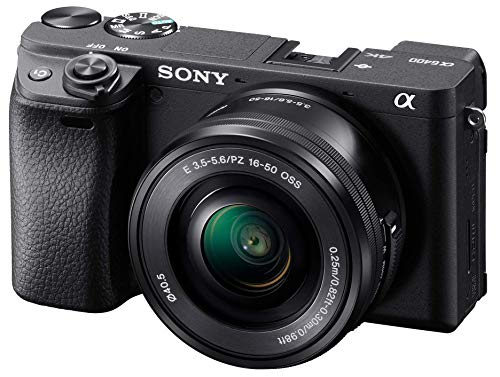 | Best for Vlogging | Sensor Format: APS-C | Lens Included: 16-50mm zoom lens | Video Resolution: 4K | VIEW LATEST PRICE | Read Our Analysis |
| Sony ILCE-7M3K/B a7 III 24.2MP Full Frame Mirrorless Camera w 28-70mm Lens |  | Best Full-Frame | Sensor Format: Full-frame | Lens Included: 28-70mm zoom lens | Video Resolution: 4K UHD | VIEW LATEST PRICE | Read Our Analysis |
| Sony Alpha ZV-E10 Mirrorless Vlog Camera (Black) |  | Best for Creators | Sensor Format: APS-C | Lens Included: No lens listed | Video Resolution: 4K oversampled | VIEW LATEST PRICE | Read Our Analysis |
| Sony Alpha 7 IV Full-frame Mirrorless Interchangeable Lens Camera |  | Best Video Quality | Sensor Format: Full-frame | Lens Included: No lens listed | Video Resolution: 4K up to 60p | VIEW LATEST PRICE | Read Our Analysis |
| Canon EOS R100 Mirrorless Camera Kit (Black) |  | Best Beginner Kit | Sensor Format: APS-C | Lens Included: 18-45mm zoom lens | Video Resolution: 4K up to 24p | VIEW LATEST PRICE | Read Our Analysis |
| Sony Alpha A6100 Mirrorless Camera (ILCE6100L/B) | Best Value | Sensor Format: APS-C | Lens Included: 16-50mm zoom lens | Video Resolution: 4K UHD | VIEW LATEST PRICE | Read Our Analysis | |
| Nikon Z 50 Mirrorless Camera with Two Lenses |  | Best Two-Lens Kit | Sensor Format: APS-C | Lens Included: 16-50mm + 50-250mm lenses | Video Resolution: 4K UHD | VIEW LATEST PRICE | Read Our Analysis |
More Details on Our Top Picks
Sony Alpha a6400 Mirrorless Camera with 16-50mm Lens
Should you want an entry-level mirrorless camera that still feels fast and capable, the Sony Alpha a6400 is a strong fit. You get a compact APS-C body with a 20.1MP stacked Exmor RS sensor, plus 425 phase-detection and 425 contrast-detection points for confident subject tracking. Real-time Eye AF helps you lock onto faces, and 11 fps shooting keeps up with action. You can record 4K video, time lapses, and slow-motion clips, then use the tilting screen for vlogging. The 16-50mm lens and included battery, charger, strap, and cables make it ready to use.
- Sensor Format:APS-C
- Lens Included:16-50mm zoom lens
- Video Resolution:4K
- Autofocus System:Real-time Eye AF
- Display Type:Tilting LCD
- Connectivity:Micro USB
- Additional Feature:11 fps burst shooting
- Additional Feature:Real-time Eye AF
- Additional Feature:Flip-up vlog screen
Sony ILCE-7M3K/B a7 III 24.2MP Full Frame Mirrorless Camera w 28-70mm Lens
The Sony ILCE-7M3K/B a7 III is a strong entry-level mirrorless choice for you should you want full-frame image quality without jumping to a much pricier pro body. Its 24.2MP back-illuminated sensor delivers sharp images, wide tonal range, and 14-bit RAW files, while ISO 50–204,800 gives you flexibility in tough light. You get 693 phase-detection AF points, 10 fps shooting, and 4K HDR video, so it handles action and content creation well. The included 28–70mm lens adds useful everyday reach, and dual SDXC slots, Wi‑Fi, Bluetooth, and NFC keep your workflow simple and reliable.
- Sensor Format:Full-frame
- Lens Included:28-70mm zoom lens
- Video Resolution:4K UHD
- Autofocus System:693-point AF
- Display Type:Tilting touch LCD
- Connectivity:Wi‑Fi, Bluetooth, NFC
- Additional Feature:15-stop dynamic range
- Additional Feature:Dual SD card slots
- Additional Feature:14-bit uncompressed RAW
Sony Alpha ZV-E10 Mirrorless Vlog Camera (Black)
Sony’s Alpha ZV-E10 is a strong entry-level pick for creators who want a lightweight mirrorless camera with pro-style video tools and room to grow. You get a 24.2MP APS-C sensor, BIONZ X processing, and oversampled 4K from 6K with full pixel readout. Its 425-point autofocus, eye detection, and real-time tracking help you stay sharp while filming. Flip out the vari-angle touchscreen, use Product Showcase, or tap Background Defocus for quick changes. You can livestream through USB, shoot with Sony E-mount lenses, and carry it easily at just 1 lb.
- Sensor Format:APS-C
- Lens Included:No lens listed
- Video Resolution:4K oversampled
- Autofocus System:Real-time Eye-AF
- Display Type:Vari-angle flip-out LCD
- Connectivity:Wi‑Fi, Bluetooth, USB
- Additional Feature:Product Showcase setting
- Additional Feature:Background Defocus button
- Additional Feature:USB live streaming
Sony Alpha 7 IV Full-frame Mirrorless Interchangeable Lens Camera
With its 33MP full-frame Exmor R sensor and 7K oversampled 4K video, the Sony Alpha 7 IV suits beginners who want room to grow into both stills and serious content creation. You get full pixel readout, no pixel binning, and up to 4K 60p 10-bit 4:2:2, so your footage stays detailed and flexible. Sony’s BIONZ XR engine delivers fast, responsive performance, while S-Cinetone helps you capture natural-looking color with less effort. Should you want a camera that can handle learning today and ambitious work tomorrow, this one’s a strong pick.
- Sensor Format:Full-frame
- Lens Included:No lens listed
- Video Resolution:4K up to 60p
- Autofocus System:Not specified
- Display Type:Not specified
- Connectivity:Not specified
- Additional Feature:33MP full-frame sensor
- Additional Feature:7K oversampled 4K
- Additional Feature:S-Cinetone color profile
Canon EOS R100 Mirrorless Camera Kit (Black)
Canon EOS R100 Mirrorless Camera Kit (Black) is a smart pick when you want a compact, beginner-friendly mirrorless camera that’s easy to carry and simple to use. You get a 24.1MP APS-C sensor, DIGIC 8 processing, and Dual Pixel CMOS AF with face, eye, animal, and vehicle detection. The RF-S18-45mm lens adds up to 4 stops of stabilization and versatile framing. You can shoot up to 6.5 fps, capture 4K video, and use Wi-Fi or Bluetooth for sharing. Its small, lightweight body helps you travel light and learn fast.
- Sensor Format:APS-C
- Lens Included:18-45mm zoom lens
- Video Resolution:4K up to 24p
- Autofocus System:Dual Pixel CMOS AF
- Display Type:Fixed LCD
- Connectivity:Wi‑Fi, Bluetooth, USB
- Additional Feature:Dual Pixel CMOS AF
- Additional Feature:Animal detect AF
- Additional Feature:Up to 4K/24p
Sony Alpha A6100 Mirrorless Camera (ILCE6100L/B)
The Sony Alpha A6100 is a strong entry-level mirrorless pick for you in the event that you want fast autofocus and easy everyday shooting in a compact body. You get a 24.2MP APS-C sensor, BIONZ X processing, and 4K UHD video in a lightweight black body. Its 425-point system locks focus in 0.02 second, while Real-time Eye AF and subject tracking help you keep people and pets sharp. The included 16–50mm zoom covers versatile everyday framing. You’ll also appreciate the tilting touchscreen, EVF, Wi-Fi, Bluetooth, and 11 fps bursts.
- Sensor Format:APS-C
- Lens Included:16-50mm zoom lens
- Video Resolution:4K UHD
- Autofocus System:Real-time Eye AF
- Display Type:Tilting touchscreen LCD
- Connectivity:Wi‑Fi, Bluetooth
- Additional Feature:World’s fastest AF
- Additional Feature:Touch Tracking autofocus
- Additional Feature:8x digital zoom
Nikon Z 50 Mirrorless Camera with Two Lenses
Nikon’s Z 50 mirrorless camera with two lenses is a smart pick in the event that you want an easy-to-carry kit that still gives you room to grow, especially in the event that you’re starting out with stills, video, or both. You get a 20.9MP APS-C sensor, 4K UHD video, eye-detection AF, and 11 fps burst shooting. The 16-50mm and 50-250mm VR lenses give you wide and telephoto reach. The flip-down touchscreen helps for selfies and vlogging, while SnapBridge, Wi-Fi, and Bluetooth make transfers simple.
- Sensor Format:APS-C
- Lens Included:16-50mm + 50-250mm lenses
- Video Resolution:4K UHD
- Autofocus System:Eye-detection AF
- Display Type:Tilting flip-down LCD
- Connectivity:Wi‑Fi, Bluetooth, SnapBridge
- Additional Feature:Two-lens kit included
- Additional Feature:SnapBridge smartphone transfer
- Additional Feature:Selfie flip-down LCD
Factors to Consider When Choosing a Mirrorless Camera Entry Level
Whenever you choose an entry-level mirrorless camera, focus on sensor size, autofocus performance, and video capabilities initially. You’ll also want to check lens options, since they affect how much you can grow with the system. Lastly, pick a body that feels comfortable to carry, because portability and weight matter more than you may expect.
Sensor Size
Sensor size is one of the biggest factors to look at because it directly affects image quality, low-light performance, lens crop factor, and the total size of the camera. Should you want better low-light shots and wider tonal range, a larger sensor usually gives you an edge. Full-frame sensors measure about 35.6 × 23.8 mm, so they let you capture more light and create shallower depth of field for smoother background blur. APS-C sensors are smaller, but they keep cameras more compact and still deliver excellent results for entry-level use. You’ll also notice a crop factor that changes your field of view, so the same lens behaves differently on each format. Pick the size that matches your shooting style and portability needs.
Autofocus Performance
After sensor size, autofocus performance is the next big factor because it determines how reliably your camera keeps subjects sharp in real-world shooting. You should look for many autofocus points and broad frame coverage, since 425 phase-detection points across about 84% of the image help the camera lock onto moving subjects more confidently. Eye-detection and real-time tracking matter too, because they keep faces and subjects sharp without you constantly nudging focus. If you shoot action, kids, or pets, fast acquisition around 0.02 seconds can help you catch the moment. Continuous autofocus and subject tracking also become important when you’re shooting bursts or video, where staying on target matters more than single-shot precision. Dense systems with 693 phase-detection points and 425 contrast-detection points usually handle mixed light better.
Video Capabilities
Video capabilities matter just as much should you want your entry-level mirrorless camera to do more than stills, so look for at least 4K UHD recording, whether that’s 4K/24p for casual use or 4K/60p for smoother motion. If you want cleaner detail, choose oversampled 4K from a 6K or 7K readout, which can cut artifacts and sharpen fine edges. A camera with 10-bit 4:2:2 recording gives you more room to grade color than 8-bit files. You should also check for slow-motion, time-lapse, and high-frame-rate Full HD modes, since they expand your creative range. For easier shooting, a tilting or flip-out touchscreen helps, while clean HDMI or micro-HDMI output and USB or wireless livestreaming support make video work more practical.
Lens Options
Once you’ve checked video features, the next big decision is lens choice, because the glass you start with shapes what your entry-level mirrorless camera can actually do. Most kits include a 16–50 mm, 18–45 mm, or 28–70 mm zoom, which covers everyday scenes from wide to standard views. You should also check mount compatibility, since it decides how many native lenses you can buy later and whether adapted legacy lenses work too. A broader system with wide-angle, standard zoom, telephoto, and prime options gives you far more room to grow. Look for lens-based stabilization if you want steadier handheld shots. Finally, compare maximum aperture, filter thread size, and optical zoom range, because they affect low-light performance, accessory fit, and subject reach.
Portability and Weight
When you plan to carry a mirrorless camera all day, weight matters almost as much as image quality. You’ll feel the difference quickly: some entry-level kits weigh about 1 lb, while larger full-frame setups can approach 1.8 lb. Choose a compact body with a small kit lens, and you’ll keep the bag lighter and the camera easier to handle. APS-C models often pack more travel-friendly because their smaller sensor systems usually support a slimmer design. A tilting or flip-out screen adds flexibility for handheld shooting and vlogging without much extra bulk. Should you expect daily carry, prioritize a lightweight body, a short lens barrel, and a single-lens kit instead of a dual-lens package. That way, you’ll actually bring it everywhere.
Connectivity Features
Beyond the lens and sensor, connectivity features can make an entry-level mirrorless camera far more useful day to day. You’ll want built-in Wi‑Fi and Bluetooth whenever you plan to move photos quickly, pair with your phone, or trigger shots remotely without cables. Whenever you’ll connect to a monitor, recorder, or TV, check for HDMI or micro-HDMI output. A USB-C or USB 3.0 port helps you transfer files faster, charge the camera, and support live streaming better than older USB 2.0 ports. Some models even let you stream through a single cable, which keeps setup simple. Finally, confirm the storage setup: UHS-I, UHS-II, or dual-card slots can speed offloads and give you safer backup options whenever you’re shooting more often.
Frequently Asked Questions
Which Entry-Level Mirrorless Camera Has the Best Battery Life?
You’ll usually get the best battery life from a Sony a6000 series body, especially the a6400 or a6600. These cameras are efficient, so you can shoot longer on a charge than many budget rivals, although actual results still depend on how you use them.
Can These Cameras Shoot Good 4K Video for Beginners?
Yes, you can. Many beginner mirrorless cameras can capture solid 4K video, and you will learn quickly, especially if you choose one with effective stabilization and simple autofocus.
Do I Need Extra Lenses to Start Taking Great Photos?
No, you do not need extra lenses at the start. A kit lens can make strong photos while you learn. Later, you can choose a prime or zoom lens that fits your style and gives you more control.
Which Camera Is Best for Travel and Everyday Carry?
For travel and everyday carry, choose a compact camera such as the Sony a6400 or Fujifilm X-S20. It keeps your bag light, handles fast shooting, and delivers sharp, vibrant images without bulky gear.
Are These Cameras Compatible With Smartphone Apps?
Yes, many cameras connect to smartphone apps for remote shooting, photo transfer, and menu control, but support depends on the exact brand and model. Check the camera’s app specifications, since older models may require a different app or may not support every feature.