


Canon’s 7 best mirrorless cameras for 2026 cover nearly every type of shooter. The EOS R5 suits high-resolution work, while the EOS R100 keeps things simple for beginners.
Canon also offers travel-ready bodies and fast-action picks. The right choice comes down to your style, budget, and shooting needs.
| Canon EOS RP Mirrorless Camera Kit (3380C132) |  | Best Travel Kit | Sensor Type: Full-frame CMOS | Lens Included: RF24-105mm kit lens | Image Stabilization: Optical IS, 5 stops | VIEW LATEST PRICE | Read Our Analysis |
| Canon EOS R5 Mirrorless Camera (Body Only) | 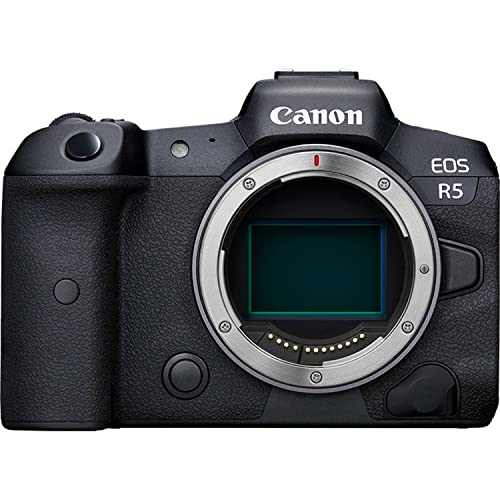 | Pro-Grade Hybrid | Sensor Type: Full-frame stacked BSI CMOS | Lens Included: Body only | Image Stabilization: 5-axis IBIS, 8 stops | VIEW LATEST PRICE | Read Our Analysis |
| Canon EOS R100 Mirrorless Camera Kit |  | Best Beginner Kit | Sensor Type: APS-C CMOS | Lens Included: RF-S18-45mm kit lens | Image Stabilization: Optical IS, 4 stops | VIEW LATEST PRICE | Read Our Analysis |
| Canon EOS R6 Mark II Mirrorless Camera |  | Best for Action | Sensor Type: Full-frame CMOS | Lens Included: Body only | Image Stabilization: 5-axis IBIS | VIEW LATEST PRICE | Read Our Analysis |
| Canon EOS R8 Mirrorless Camera Body Black | 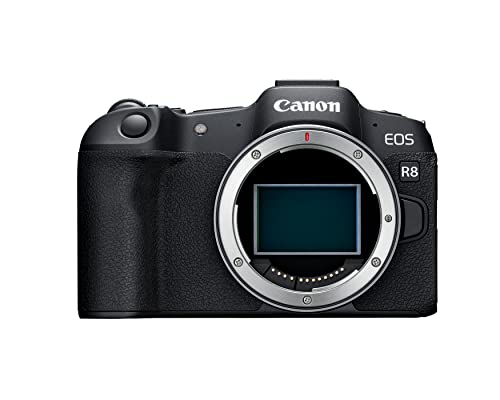 | Best for Video | Sensor Type: Full-frame CMOS | Lens Included: Body only | Image Stabilization: Not listed | VIEW LATEST PRICE | Read Our Analysis |
| Canon EOS R7 Mirrorless Camera Body Only |  | Best APS-C | Sensor Type: APS-C CMOS | Lens Included: Body only | Image Stabilization: 5-axis IBIS, 7 stops | VIEW LATEST PRICE | Read Our Analysis |
| Canon EOS R10 Mirrorless Camera with RF-S 18-45mm Lens Kit |  | Best Midrange Pick | Sensor Type: APS-C CMOS | Lens Included: RF-S 18-45mm kit lens | Image Stabilization: Not listed | VIEW LATEST PRICE | Read Our Analysis |
More Details on Our Top Picks
Canon EOS RP Mirrorless Camera Kit (3380C132)
Should you want a full-frame mirrorless camera that’s easy to carry, the Canon EOS RP Mirrorless Camera Kit (3380C132) is a strong pick for travel, vlogging, and everyday shooting. You get a compact black body plus the RF24-105mm F4-7.1 IS STM lens, which gives you a flexible 24-105mm zoom range. Optical Image Stabilization helps steady your shots with up to 5 stops of correction. You can also focus close, capture 4K UHD video, and use clean HDMI output or EOS Utility Webcam Beta Software for streaming and calls.
- Sensor Type:Full-frame CMOS
- Lens Included:RF24-105mm kit lens
- Image Stabilization:Optical IS, 5 stops
- Video Resolution:4K UHD
- Autofocus:AF not listed
- Wireless Connectivity:Webcam software
- Additional Feature:Compact travel design
- Additional Feature:Clean HDMI output
- Additional Feature:Webcam beta software
Canon EOS R5 Mirrorless Camera (Body Only)
The Canon EOS R5 Mirrorless Camera body only is a strong choice provided you want a full-frame hybrid camera that balances high-resolution stills with serious video power. You get a 45MP stacked, back-side illuminated sensor, DIGIC X processing, and Dual Pixel CMOS AF II with 1,053 points for fast, reliable tracking. Shoot up to 20 fps silently, or 12 fps mechanically, with 5-axis stabilization that can deliver up to 8 stops of correction. You also get 8K RAW, 4K 120 fps, dual card slots, Wi-Fi, Bluetooth, and a rugged magnesium alloy body.
- Sensor Type:Full-frame stacked BSI CMOS
- Lens Included:Body only
- Image Stabilization:5-axis IBIS, 8 stops
- Video Resolution:8K UHD
- Autofocus:Dual Pixel CMOS AF II
- Wireless Connectivity:Bluetooth, Wi‑Fi
- Additional Feature:45 MP sensor
- Additional Feature:8K RAW video
- Additional Feature:Eye Control AF
Canon EOS R100 Mirrorless Camera Kit
Canon EOS R100 Mirrorless Camera Kit is a smart pick for beginners and casual creators who want a compact EOS R body without a steep learning curve. You get a 24.1MP APS-C sensor, DIGIC 8 processing, and Dual Pixel CMOS AF with face, eye, animal, and vehicle detection. The RF-S18-45mm IS STM lens adds 4 stops of stabilization and useful versatility. Shoot 4K at 24 fps, Full HD at 60 fps, or 6.5 fps bursts. Wi-Fi, Bluetooth, and a 3-inch LCD make sharing and framing easy.
- Sensor Type:APS-C CMOS
- Lens Included:RF-S18-45mm kit lens
- Image Stabilization:Optical IS, 4 stops
- Video Resolution:4K UHD
- Autofocus:Dual Pixel CMOS AF
- Wireless Connectivity:Wi‑Fi, Bluetooth
- Additional Feature:Smallest EOS R body
- Additional Feature:143 AF zones
- Additional Feature:49mm filter thread
Canon EOS R6 Mark II Mirrorless Camera
With its 24.2MP full-frame sensor, DIGIC X processor, and Dual Pixel CMOS AF II, the Canon EOS R6 Mark II is a strong choice for photographers and creators who need fast, reliable performance in low light. You’ll capture sharp, detailed images with minimal noise, plus 14-bit color and flexible C-RAW, HEIF, and JPEG files. It shoots at up to 40 fps, tracks people, animals, and vehicles, and records oversampled 4K 60p or Full-HD 180 fps video. You also get 5-axis stabilization, vari-angle touch control, Wi-Fi, Bluetooth, and a 3.69-million-dot EVF.
- Sensor Type:Full-frame CMOS
- Lens Included:Body only
- Image Stabilization:5-axis IBIS
- Video Resolution:6K oversampled 4K
- Autofocus:Dual Pixel CMOS AF II
- Wireless Connectivity:Wi‑Fi, Bluetooth
- Additional Feature:40 fps shooting
- Additional Feature:6K oversampled 4K
- Additional Feature:120 fps EVF
Canon EOS R8 Mirrorless Camera Body Black
Ideal for you should you want a compact full-frame mirrorless body that can do serious stills and video, the Canon EOS R8 pairs a 24.2MP sensor and DIGIC X processor with Dual Pixel CMOS AF II for fast, accurate subject tracking. You’ll get uncropped 4K 60p oversampled from 6K, 180 fps Full HD, and Canon Log 3 for flexible grading. The vari-angle touchscreen and bright OLED EVF make shooting easy, while Wi‑Fi, Bluetooth, USB, and webcam support keep you connected. Its lightweight RF design, 40 fps burst rate, and deep subject detection make it a strong all-rounder for travel, action, and content creation.
- Sensor Type:Full-frame CMOS
- Lens Included:Body only
- Image Stabilization:Not listed
- Video Resolution:4K oversampled
- Autofocus:Dual Pixel CMOS AF II
- Wireless Connectivity:Wi‑Fi, Bluetooth
- Additional Feature:Canon Log 3
- Additional Feature:UVC/UAC streaming
- Additional Feature:2-hour movie time
Canon EOS R7 Mirrorless Camera Body Only
The Canon EOS R7 mirrorless body only is a strong pick when you want a fast, compact APS-C camera that can keep up with action, wildlife, and content creation. You get a 32.5MP sensor, DIGIC X processing, and Dual Pixel CMOS AF II with 651 points and subject detection for people, animals, and vehicles. Shoot at 15 fps mechanically or 30 fps electronically, and rely on 5-axis stabilization for steadier results. It also records 4K 60p, uses an RF mount, and includes dual UHS-II card slots plus a tilting touchscreen.
- Sensor Type:APS-C CMOS
- Lens Included:Body only
- Image Stabilization:5-axis IBIS, 7 stops
- Video Resolution:4K UHD
- Autofocus:Dual Pixel CMOS AF II
- Wireless Connectivity:Not listed
- Additional Feature:32.5MP APS-C sensor
- Additional Feature:RAW Burst Mode
- Additional Feature:Seven-stop stabilization
Canon EOS R10 Mirrorless Camera with RF-S 18-45mm Lens Kit
Canon EOS R10 Mirrorless Camera with RF-S 18-45mm Lens Kit stands out should you want a compact, lightweight camera that still delivers serious speed and image quality. You get a 24.2 MP APS-C CMOS sensor and DIGIC X processor for sharp photos and ultra-high-definition video. Subject detection autofocus helps you track subjects confidently, while the mechanical shutter shoots up to 15 fps for action. The included RF-S 18-45mm lens gives you a versatile start, and you can expand with RF, RF-S, EF, or EF-S lenses using an adapter. Battery, charger, and strap are included.
- Sensor Type:APS-C CMOS
- Lens Included:RF-S 18-45mm kit lens
- Image Stabilization:Not listed
- Video Resolution:Sharp UHD video
- Autofocus:Subject detection AF
- Wireless Connectivity:Not listed
- Additional Feature:RF-S 18-45mm lens
- Additional Feature:Up to 15 fps
- Additional Feature:EF lens adapter support
Factors to Consider When Choosing a Cannon Mirrorless Camera
When you choose a Canon mirrorless camera, start with sensor size because it shapes image quality, low-light performance, and overall portability. You’ll also want to check autofocus performance, video recording features, lens compatibility, and whether the body includes in-body stabilization. These factors help you match the camera to the way you shoot.
Sensor Size Matters
Sensor size matters because it directly affects image quality, handling, and lens selection. If you choose a larger sensor, you’ll usually get better low-light performance, less noise, and more dynamic range because it captures more light. Full-frame Canon mirrorless cameras often give you the shallower depth of field and stronger background separation you want for portraits and subject isolation. They also show a wider field of view at the same focal length than APS-C bodies, which crop the image and narrow the angle of view. APS-C cameras, though, keep the system smaller and lighter. Bigger sensors can also preserve more detail in high-resolution files. Just keep in mind that larger sensors often need larger lenses and bodies, so portability changes too.
Autofocus Performance
Beyond sensor size, autofocus performance is another major factor when you’re choosing a Canon mirrorless camera. You should look for a system with plenty of AF points and broad frame coverage, because that helps the camera lock onto subjects more reliably across the scene. Phase-detection autofocus with subject detection can speed things up through identifying people, animals, vehicles, and other targets without constant manual changes. Eye and face detection matter too, especially assuming you shoot portraits or want sharp focus on a person’s expression. Assuming you photograph action, continuous autofocus lets the camera keep tracking as the subject moves nearer or farther away. Don’t overlook low-light AF, either, since a camera that focuses well in dim scenes won’t hunt as much once the light drops.
Video Recording Needs
If video matters to you, focus on a Canon mirrorless camera’s resolution, frame rates, and recording limits initially. You’ll want 8K if you need maximum detail, or 4K at up to 120 fps when you want smooth slow motion. For everyday work, uncropped 4K at 60 fps gives you strong quality without extra crop. If you record long takes, check thermal behavior and the maximum clip length, because some bodies run for hours in Full-HD while others stop near 2 hours. Also, choose a model with reliable video autofocus and subject tracking for faces, eyes, animals, or vehicles. For streaming or recording to an external device, verify UVC/UAC support, HDMI, or clean HDMI. Stabilization helps too, especially 5-axis IBIS or optical correction.
Lens Compatibility
Lens compatibility should be one of your initial checks after video specs, because the right body only helps when it works with the glass you already own or plan to buy. Check the mount first: full-frame RF bodies take RF lenses directly, while APS-C models may also handle EF and EF-S glass with an adapter. Then confirm whether you’re buying full-frame or APS-C, since APS-C bodies crop full-frame lenses and change your field of view. If you want flexibility, choose a system that supports native and adapted older mounts, especially if you already own EF lenses. Also, verify kit lens focal length and aperture, because 18–45mm and 24–105mm serve different needs. Finally, make sure any adapter preserves the autofocus and stabilization behavior you expect.
In-Body Stabilization
Whenever you shoot handheld, in-body image stabilization can make a big difference by shifting the sensor to counter shake, which helps you get sharper results in low light and at slower shutter speeds. Whenever you compare Cannon mirrorless cameras, look at how many stops of correction they offer, because higher numbers mean more stability and more freedom to shoot without a tripod. Five-axis systems go further by correcting tilt, shift, roll, and other tiny motions, so you’ll see less blur in real-world use. Some bodies also work with stabilized lenses, which can improve steadiness for both stills and video. The best systems coordinate sensor and lens movement well and can deliver up to around 8 stops in ideal conditions, giving you more confidence in difficult light and during casual handheld shooting.
Burst Shooting Speed
Burst shooting speed tells you how many frames per second a Cannon mirrorless camera can capture, and that matters while you’re trying to freeze fast action in sports or wildlife. When you compare models, check both mechanical and electronic shutter rates, because the electronic option often shoots faster. Higher speeds like 15 fps, 20 fps, 30 fps, or even 40 fps can help you catch tiny shifts in motion, eye position, or expression. But don’t judge speed alone. You also need reliable autofocus and enough processing power to keep the burst going without slowing down. Should you shoot action often, look for raw burst modes or pre-shooting features, since they can record the split second before you fully press the shutter, giving you a better chance to nail the moment.
Portability And Weight
Portability matters more than you could envision, especially while you’ll carry your Cannon mirrorless camera for travel, street shooting, or vlogging. A lighter body lets you shoot longer without fatigue, and compact dimensions make the camera easier to pack and hold. Should you spend hours on the move, every ounce counts, especially while you’re shooting one-handed or working from a neck strap. Body-only models usually stay more manageable than kit setups because you’re not adding lens weight right away. APS-C mirrorless systems often give you the best balance of size and convenience, while full-frame bodies usually add bulk for extra capability. Before you buy, check the total weight with the battery, memory card, and lens attached, since that’s the load you’ll actually feel all day.
Connectivity Options
Connectivity can make or break how smoothly you use your Cannon mirrorless camera, so it’s worth checking the right options before you buy. You’ll want built-in Wi‑Fi and Bluetooth provided that you expect quick photo transfers, remote shooting, or app control from your phone. Check USB support too, because the port type affects charging, file speed, and which accessories you can use. Should you edit or back up big files often, a USB Type-C port with 10 Gbps support can save you time. For video work, look for HDMI or micro-HDMI so you can connect an external monitor, recorder, or livestream gear. Should you plan to stream, confirm UVC/UAC or webcam software support so you can plug into your computer without extra capture hardware.
Frequently Asked Questions
Which Canon Mirrorless Camera Has the Best Battery Life?
The Canon EOS R5 Mark II offers the strongest battery performance among Canon mirrorless bodies, especially with the LP-E6P. For long shoots, a spare is still a smart backup, but the camera holds up very well.
Are Canon RF Lenses Compatible With All Canon Mirrorless Bodies?
No, Canon RF lenses do not work on every Canon mirrorless body. They are made for EOS R cameras. In 2026, Canon’s mirrorless lineup still includes APS C and full frame models, while older EF M bodies require different lenses.
Do Canon Mirrorless Cameras Support In-Body Image Stabilization?
Yes, several Canon mirrorless cameras include in body image stabilization, but some do not. Many EOS R models have it, while others depend on lens stabilization, so check the specifications for each camera.
Which Canon Mirrorless Model Is Best for Video Recording?
For video work, the EOS R5 C stands out with 8K recording, cinema focused controls, and reliable autofocus. If you want a more flexible 4K option, the EOS R6 Mark II is a strong alternative.
Can Canon Mirrorless Cameras Be Used for Live Streaming?
Yes, Canon mirrorless cameras work well for live streaming through USB or HDMI output. They deliver sharper video, accurate autofocus, and steady performance when used with a capture device.