


Choosing your first mirrorless camera in 2026 can feel overwhelming, but the right model depends on how you shoot and what you value most. You’ll find solid options here for sharp stills, smooth video, travel-friendly size, and better low-light results. Whether you want an affordable starter body or a more capable full-frame system, these six cameras cover the key trade-offs—and a few may surprise you.


More Details on Our Top Picks
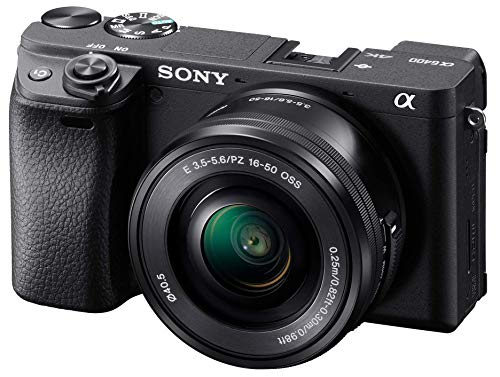
Sony Alpha a6400 Mirrorless Camera (ILCE-6400L/B)
If you want an entry-level mirrorless camera that still feels serious, the Sony Alpha a6400 is a strong pick. You get a 24.2MP APS-C sensor, Real-Time Eye AF, and 425 phase-detection points that lock focus fast. Shoot up to 11 fps, capture sharp 4K UHD video, and use the 180° tilting touchscreen for vlogging or selfies. The included 16–50mm lens gives you a handy everyday zoom range. At 10.3 oz, it stays compact, and Wi-Fi plus USB and micro-HDMI connectivity make transfers easy.
- Sensor Type:APS-C CMOS
- Lens Kit:16-50mm zoom
- Video:4K UHD
- Autofocus:Hybrid AF
- Screen:Tilting touchscreen
- Wireless:Wi‑Fi
- Additional Feature:425-point hybrid AF
- Additional Feature:11 fps burst shooting
- Additional Feature:180° tilting touchscreen
Sony ILCE-7M3K/B a7 III 24.2MP Full Frame Mirrorless Camera w 28-70mm Lens
The Sony ILCE-7M3K/B a7 III stands out as a smart entry-level full-frame option for photographers who want pro-grade image quality without jumping into a much pricier body. You get a 24.2MP back-illuminated Exmor R sensor, 15-stop dynamic range, and 14-bit uncompressed RAW for rich detail. Its 693 phase-detection AF points and 425 contrast points cover 93% of the frame, while 10fps shooting helps you catch action. With the included 28-70mm lens, battery, and essentials, you’re ready to shoot right away.
- Sensor Type:Full-frame BSI CMOS
- Lens Kit:28-70mm zoom
- Video:4K video
- Autofocus:693-point AF
- Screen:Fixed LCD
- Wireless:Not specified
- Additional Feature:15-stop dynamic range
- Additional Feature:14-bit uncompressed RAW
- Additional Feature:93% AF coverage
Sony Alpha ZV-E10 Mirrorless Vlog Camera (Black)
Sony’s Alpha ZV-E10 is a smart pick for creators who want an easy-to-use entry-level mirrorless camera that still delivers serious video and photo performance. You get a 24.2MP APS-C sensor, BIONZ X processing, and oversampled 4K video with full pixel readout, so your footage looks crisp. The flip-out touchscreen, Product Showcase setting, and Background Defocus button make vlogging simple. Fast Hybrid AF, Real Time Eye AF, and 425 focus points keep subjects sharp. You can stream through one USB cable, connect by Wi‑Fi or Bluetooth, and carry this lightweight body easily.
- Sensor Type:APS-C Exmor CMOS
- Lens Kit:Body only
- Video:4K 4320p
- Autofocus:Real-time Eye AF
- Screen:Flip-out touchscreen
- Wireless:Bluetooth/Wi‑Fi
- Additional Feature:Product Showcase Setting
- Additional Feature:Background Defocus button
- Additional Feature:Live streaming via USB
Panasonic LUMIX G85 4K Mirrorless Camera (DMC-G85MK)
Panasonic’s LUMIX G85 is a smart pick for you if you want an entry-level mirrorless camera that does a little of everything well. You get a compact Micro Four Thirds body, a 16 MP sensor without a low-pass filter, and a 12–60mm Power O.I.S. zoom that covers everyday shooting. Its 5-axis Dual I.S. helps you keep photos and video steady, even handheld. You can shoot 4K UHD, use Eye Detection AF, and frame shots on the tilt, touch LCD or sharp OLED viewfinder. Wi‑Fi and UHS-II support make sharing and recording easier.
- Sensor Type:Micro Four Thirds CMOS
- Lens Kit:12-60mm zoom
- Video:4K UHD
- Autofocus:Eye Detection AF
- Screen:Tilt touchscreen
- Wireless:Wi‑Fi
- Additional Feature:5-axis Dual I.S.
- Additional Feature:Integrated OLED viewfinder
- Additional Feature:4K Post Focus
Sony Alpha 7 IV Full-frame Mirrorless Interchangeable Lens Camera
Built for creators who want a serious step up without jumping into a pro-only system, the Sony Alpha 7 IV pairs a 33MP full-frame Exmor R sensor with the fast BIONZ XR engine to give you sharp stills, reliable autofocus performance, and plenty of room to grow. You can shoot up to 4K 60p 10-bit 4:2:2 with full pixel readout, or 7K oversampled 4K 30p without pixel binning. S-Cinetone helps you get beautiful color fast, while the body handles 0 to 40 °C. It’s a versatile camera that rewards your next creative leap.
- Sensor Type:Full-frame BSI CMOS
- Lens Kit:Body only
- Video:4K 60p
- Autofocus:Fast AF
- Screen:Tilting touchscreen
- Wireless:Not specified
- Additional Feature:33MP full-frame sensor
- Additional Feature:BIONZ XR processor
- Additional Feature:S-Cinetone color profile
Canon EOS R100 Mirrorless Camera Kit
The Canon EOS R100 Mirrorless Camera Kit is a smart pick if you want your first interchangeable-lens camera without a steep learning curve. You get a 24.1MP APS-C sensor, DIGIC 8 processing, and the RF-S18-45mm f/4.5-6.3 IS STM lens, which gives you flexible everyday framing with up to 4 stops of stabilization. Dual Pixel CMOS AF tracks faces, eyes, animals, and vehicles, while 4K video at 24 fps and Full HD at 60 fps cover casual shooting. Its compact body, Wi‑Fi, Bluetooth, and EVF make it easy to carry and share.
- Sensor Type:APS-C CMOS
- Lens Kit:18-45mm zoom
- Video:4K video
- Autofocus:Dual Pixel AF
- Screen:Fixed LCD
- Wireless:Bluetooth/Wi‑Fi
- Additional Feature:Animal detect AF
- Additional Feature:Smallest EOS R body
- Additional Feature:4-stop lens stabilization
Factors to Consider When Choosing an Entry Level Mirrorless Camera
When you choose an entry-level mirrorless camera, you should look at sensor size, autofocus performance, and low-light capability first. You’ll also want to check video recording features if you plan to shoot more than stills. Finally, compare lens kit value so you get the best setup for your budget.
Sensor Size Matters
Sensor size matters because it shapes both image quality and how a camera feels to use. If you want better low-light results and more dynamic range, a larger sensor usually helps because it captures more light. APS-C is a smart entry-level pick for you since it balances image quality, size, and price, and many bodies offer around 24 MP. If you want the richest background blur and stronger high-ISO performance, full-frame gives you that, but the bodies are usually bigger and heavier. Micro Four Thirds keeps your kit lighter and more compact, though you’ll give up some low-light ability and depth-of-field control. Remember, crop sensors also change your field of view, making lenses look longer than on full-frame.
Autofocus Performance
Autofocus matters just as much as sensor size, because a camera that can’t lock on fast won’t capture sharp shots when the moment counts. You should look for systems with plenty of focus points and broad coverage; cameras with 425 points or more that cover over 84% of the sensor give you more flexibility across the frame. Hybrid autofocus, which blends phase-detection and contrast-detection, usually tracks moving subjects more confidently than simpler systems, especially when you shoot in bursts. Eye detection and real-time tracking help you keep faces and action sharp, so portraits and candid moments stay usable. If a camera offers 693 phase-detection points, you’ll often get better subject recognition and precision. Also, check AF speed alongside burst rate and shutter response.
Video Recording Features
Once you’re happy with focus performance, video features become the next big filter for an entry-level mirrorless camera. You should check for 4K support first, since some models offer standard 4K UHD while others use oversampled 6K footage for cleaner detail. Then look at frame rates: 4K might top out at 24 fps, 30 fps, or even 60p if you want smoother motion. If you plan to edit heavily, 10-bit 4:2:2 or 14-bit RAW can give you more grading room. Also scan for slow motion, time-lapse, quick motion, 4K photo, and post-focus modes. Finally, make sure the body includes a flip-out or tilting screen, mic input, USB streaming support, and Micro-HDMI for easier monitoring and content creation.
Lens Kit Value
A good kit lens can make an entry-level mirrorless camera far more useful from day one, since it gives you a versatile zoom range like 16–50mm, 18–45mm, or 12–60mm without needing extra glass right away. You’ll get immediate value because you can shoot landscapes, portraits, and everyday scenes with one package. Wider ranges, like 12–60mm, give you more framing freedom than shorter kits. Check whether the lens includes optical stabilization, since it helps steady handheld shots and video. Also look at the aperture: a constant or modest f/3.5 to f/4.5–6.3 lens affects how much light and background blur you’ll get. Finally, make sure the lens matches the camera’s mount and sensor format so you don’t pay for adapters.
Low-Light Capability
When you’re choosing an entry-level mirrorless camera for low light, sensor size, lens aperture, and stabilization matter most. You’ll usually get cleaner results from a larger sensor, so full-frame models often beat APS-C and Micro Four Thirds cameras in dim rooms or at night. Pair that with a wide-aperture lens, and you let more light hit the sensor for faster shutter speeds and better exposure indoors. Check the camera’s usable ISO range too; higher settings can help, but very high ISO, even up to 204,800 on some bodies, usually adds noise. Don’t overlook autofocus either. A system with strong low-light sensitivity and wide coverage can lock focus more reliably when contrast drops.
In-Body Stabilization
In-body stabilization helps you keep shots sharp by shifting the sensor to counter camera shake, which is especially useful if you shoot handheld at slower shutter speeds or in low light. If you shoot often without a tripod, this feature can make a big difference in your results. A camera with 5-axis stabilization can correct movement in several directions, so you’ll usually get steadier stills and smoother video. Some models also pair sensor stabilization with lens optical stabilization, which can improve performance even more. If a camera skips in-body stabilization, it can still perform well, but you’ll likely need stabilized lenses or faster shutter speeds to avoid blur. For entry-level use, prioritize it if you plan to shoot handheld, record video, or use non-stabilized lenses.
Connectivity Options
Once you’ve considered stabilization, check the camera’s connectivity options, since they affect how easily you can move files, control the camera, and use external devices. Look for built-in Wi‑Fi and Bluetooth if you want quick transfers, remote shooting, or easy sharing without cables. Also check USB support: USB 3.0 usually moves files faster than USB 2.0 and can improve live-streaming setups. If you plan to connect to a monitor or TV, make sure the body includes a Micro‑HDMI or HDMI output. Count the ports too; some entry-level models give you just one USB and one video-out connection, while others offer more. Finally, verify memory card support, including SD/SDHC/SDXC and UHS‑I or UHS‑II compatibility, so your workflow stays smooth.
Battery Life
Battery life can be a major differentiator in entry-level mirrorless cameras, so check the battery type first: smaller packs like NP-FW50 or LP-E6N-style batteries usually won’t last as long as larger-capacity options. You’ll often get very different runtime from cameras that look similar on paper. If you shoot 4K video, 10-bit clips, or live stream, expect faster drain than when you’re taking stills. Using the rear LCD, especially a flip-out touchscreen or bright display, also shortens runtime compared with the electronic viewfinder. Fast burst rates and advanced autofocus can add more strain during action shooting. For long days, choose a camera that supports USB power delivery or external charging, so you can keep shooting beyond one battery.
Frequently Asked Questions
Which Entry-Level Mirrorless Camera Has the Best Autofocus for Moving Subjects?
You’ll get the best autofocus for moving subjects from Sony’s a6100 or Canon’s EOS R50; both track faces and eyes reliably, so you can shoot sports, pets, and kids with confidence.
Are Entry-Level Mirrorless Cameras Good for Low-Light Photography?
Yes—entry-level mirrorless cameras can be night owls for low light, but you’ll usually get better results with larger sensors, fast lenses, and good stabilization. You’ll need to manage noise, though, especially at higher ISO.
How Important Is Lens Selection for a Beginner Mirrorless Camera?
Lens selection matters a lot; you’ll often notice bigger image-quality gains from a good lens than from a pricier body. You should pick lenses that match your subjects, budget, and future growth.
Can Entry-Level Mirrorless Cameras Shoot Professional-Looking Video?
Absolutely—yes, you can. As they say, good tools make good work. You’ll get professional-looking video if you light well, stabilize shots, and use decent lenses, even with entry-level mirrorless cameras.
What Accessories Should Beginners Buy With Their First Mirrorless Camera?
You should buy a spare battery, fast memory card, protective lens filter, camera bag, and microfiber cloth first. Add a basic zoom lens and tripod if you’ll shoot photos or video often.
Final Thoughts
When you pick your first mirrorless camera, you’re really choosing the lens through which your story grows. The Sony a6400 and ZV-E10 feel like quick sparks, the a7 III and a7 IV like steady firelight, the G85 like a firm hand, and the Canon R100 like a clear first step. Trust the one that matches your pace, and you’ll carry a small key that opens bigger creative doors.