


The best mirrorless camera brands for 2026 are Sony, Canon, Fujifilm, Nikon, and Panasonic.
Sony and Canon lead with options for beginners, vloggers, and pros.
Fujifilm stands out for style and hands-on controls.
The right pick depends on how you shoot, what you carry, and which features save time.



More Details on Our Top Picks
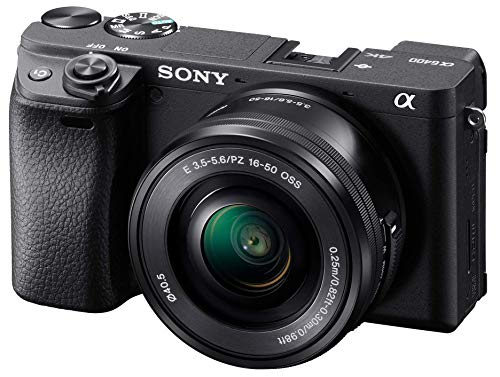
Sony Alpha a6400 Mirrorless Camera with 16-50mm Lens
Should you want a compact mirrorless camera that still delivers fast autofocus and sharp image quality, the Sony Alpha a6400 is a strong choice for you. You get a 20.1MP APS-C Exmor RS sensor, 425 phase-detection points, and 425 contrast-detection points across 84% of the frame. Real-time Eye AF and improved tracking help you lock onto subjects quickly, while 11 fps shooting captures action. You can also record 4K video, time-lapses, and slow motion. The tilting screen helps with vlogging, and the included 16-50mm lens adds flexibility for everyday shooting.
- Sensor Type:APS-C
- Megapixels:20.1MP
- Lens Included:16-50mm
- Video Resolution:4K
- Autofocus:425-point
- Screen Type:Tilting LCD
- Additional Feature:425 phase-detect points
- Additional Feature:11 fps burst shooting
- Additional Feature:Tiltable LCD screen
Sony ILCE-7M3K/B a7 III 24.2MP Full Frame Mirrorless Camera w 28-70mm Lens
The Sony ILCE-7M3K/B a7 III is a strong pick provided you want a full-frame mirrorless camera that balances image quality, speed, and versatility in one package. You get a 24.2MP back-illuminated Exmor R sensor, 15-stop tonal range, and 14-bit RAW files for rich detail. Its 693-point hybrid AF system tracks subjects confidently, and 10 fps burst shooting helps you catch fast action. The included 28–70mm f/3.5–5.6 lens adds optical stabilization, while 4K HDR video, dual SD slots, and Wi‑Fi keep your workflow flexible.
- Sensor Type:Full-frame
- Megapixels:24.2MP
- Lens Included:28-70mm
- Video Resolution:4K UHD
- Autofocus:693-point
- Screen Type:Tilting LCD
- Additional Feature:Full-frame 35mm sensor
- Additional Feature:15-stop dynamic range
- Additional Feature:Dual SDXC slots
Canon EOS RP Full-Frame Mirrorless Camera Kit (3380C132)
Canon’s EOS RP kit is a strong pick provided you want full-frame image quality in a compact mirrorless body without carrying a lot of weight. You get a 26.2MP sensor, DIGIC 8 processing, and Dual Pixel CMOS AF with 4,779 points for quick, confident focusing. The included RF24-105mm STM lens gives you versatile 24–105mm coverage with optical stabilization up to 5 stops. You can shoot 4K video, connect via Wi‑Fi or Bluetooth, and use the articulating touchscreen or EVF. At just 16 oz, it’s easy to carry.
- Sensor Type:Full-frame
- Megapixels:26.2MP
- Lens Included:RF24-105mm
- Video Resolution:4K UHD
- Autofocus:Dual Pixel AF
- Screen Type:Articulating LCD
- Additional Feature:Dual Pixel CMOS AF
- Additional Feature:Articulating touch LCD
- Additional Feature:Webcam support
Sony Alpha ZV-E10 Mirrorless Vlog Camera (Black)
Sony’s Alpha ZV-E10 is a strong pick in case you want a lightweight mirrorless camera built for vlogging and streaming, because it pairs a 24.2MP APS-C sensor with 4K oversampled video, fast hybrid autofocus, and a flip-out touchscreen. You can switch lenses on the E-mount body, shoot in RAW or JPEG, and rely on Real-time Eye AF to keep faces sharp. The Product Showcase setting and Background Defocus button make creator work easier. With USB streaming, Bluetooth, Wi‑Fi, and a 1-pound body, it’s a practical Sony option for content creation.
- Sensor Type:APS-C
- Megapixels:24.2MP
- Lens Included:No lens included
- Video Resolution:4K oversampled
- Autofocus:425-point
- Screen Type:Flip-out LCD
- Additional Feature:Oversampled 4K video
- Additional Feature:Product Showcase Setting
- Additional Feature:Background Defocus button
Canon EOS R100 Mirrorless Camera Kit (RF-S18-45mm)
With its 24.1MP APS-C sensor, compact body, and included RF-S18-45mm lens, the Canon EOS R100 is a strong pick whenever you want an affordable entry-level mirrorless camera that’s easy to carry and simple to grow with. You’ll get sharp detail, natural bokeh, and 4K capture, plus a DIGIC 8 processor for smoother performance. Dual Pixel CMOS AF with face, eye, animal, and vehicle detection helps you track subjects confidently. You can also shoot up to 6.5 fps in One-Shot AF mode. Its lightweight design makes travel and everyday shooting easier, and the interchangeable lens system gives you room to expand.
- Sensor Type:APS-C
- Megapixels:24.1MP
- Lens Included:RF-S18-45mm
- Video Resolution:4K
- Autofocus:Dual Pixel CMOS AF
- Screen Type:Not specified
- Additional Feature:Smallest EOS R body
- Additional Feature:Animal detect AF
- Additional Feature:4K at 24 fps
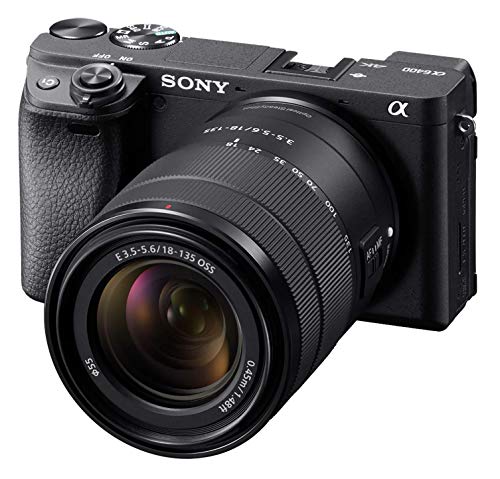
Sony a6400 Mirrorless Camera with 18-135mm Lens
Should you want a mirrorless camera that can keep up with fast action, the Sony a6400 with the 18-135mm lens is a strong fit thanks to its 0.02-second AF, real-time autofocus, and subject tracking. You also get 425 phase-detection points and 425 contrast-detection points across 84% of the sensor, so you can lock focus quickly. Shoot up to 11 fps, capture 24.2 MP RAW files, and enjoy crisp, natural colors. The tilting LCD helps you vlog or film, and you’ll get useful extras like the battery, charger, strap, and lens corrections.
- Sensor Type:APS-C
- Megapixels:24.2MP
- Lens Included:18-135mm
- Video Resolution:4K
- Autofocus:425-point
- Screen Type:Tilting LCD
- Additional Feature:0.02 sec AF
- Additional Feature:Object tracking
- Additional Feature:Lens compensation support
Fujifilm X-T3 Mirrorless Digital Camera (Body Only) – Silver
The Fujifilm X-T3 Mirrorless Digital Camera is a strong pick should you want a compact APS-C body that still delivers pro-level speed and image quality. You get a 26.1MP X-Trans CMOS 4 sensor with X-Processor 4, 14-bit RAW files, and 16 film simulations for creative control. Its 425-point autofocus, eye detection, and 11 fps blackout-free burst shooting help you track action confidently. You can also record 4K/60p video, use the bright OLED EVF, and connect via Wi-Fi, Bluetooth, HDMI, and USB. At 14.29 oz, it stays portable too.
- Sensor Type:APS-C
- Megapixels:26.1MP
- Lens Included:Body only
- Video Resolution:4K DCI
- Autofocus:425-point
- Screen Type:Tilting LCD
- Additional Feature:4K/60P recording
- Additional Feature:10-bit HDMI output
- Additional Feature:Blackout-free burst shooting
Factors to Consider When Choosing a Mirrorless Camera Brand
When you choose a mirrorless camera brand, start with comparing sensor size, autofocus performance, and the lens ecosystem it supports. You should also check each brand’s video capabilities, especially in case you shoot content beyond still photos. Finally, make sure the body design feels comfortable in your hands and matches how you like to shoot.
Sensor Size
Sensor size plays a big role in how a mirrorless camera brand will feel and perform, especially when you shoot in low light or want strong background blur. If you choose a full-frame system, you’ll usually get a larger sensor, around 35.6 × 23.8 mm, which can gather more light, boost dynamic range, and give you shallower depth of field for portraits. APS-C bodies are smaller and lighter, so you can carry less gear without giving up strong image quality. Many deliver 20 MP to 26 MP files that still look detailed. Remember that focal length changes too: the same lens looks wider on full frame and more cropped on APS-C. Compare sensor size and resolution together, because specs don’t tell the whole story.
Autofocus System
Autofocus matters just as much as sensor size, especially when you shoot portraits, sports, or video and need the camera to lock on fast and stay there. You should look for a high-density autofocus system with lots of phase-detection and contrast-detection points, because broader coverage helps the camera stay accurate on moving subjects. Hybrid autofocus usually gives you quicker acquisition and more dependable results than simpler setups. Real-time eye detection and subject tracking are especially useful when you need a face or subject to stay sharp during motion. Aim for wide autofocus coverage, around 84% to 93% of the frame, so you can compose off-center without losing focus. When you shoot fast action, check continuous autofocus performance and burst tracking, since some systems keep focus at 10–11 fps.
Lens Ecosystem
A mirrorless brand’s lens ecosystem can make or break your experience, because the mount and lens compatibility determine how many native lenses and accessories you can actually use. You should check whether the brand uses a dedicated mount with broad support, since that usually means more lenses now and more choices later. Sensor size matters, too: APS-C systems often give you smaller, lighter glass, while full-frame brands usually offer wider focal-length coverage and more premium options. Look for ecosystems that include compact kit zooms like 16–50mm or 18–45mm, plus flexible choices like 24–105mm or 28–70mm. Also verify autofocus support, aperture, stabilization, filter size, and focal range, because they shape low-light performance, portability, and creative freedom.
Video Capabilities
Beyond lens compatibility, a mirrorless brand’s video features can strongly shape how useful it is for your work or content creation. You should check 4K quality initially, because some brands offer oversampled 4K from higher-resolution sensors, while others stick to standard UHD capture. Should you want serious editing flexibility, look for 4K/60p, 10-bit internal recording, and 4:2:2 HDMI output, since these features help with color grading and professional workflows. Frame-rate options also matter; 120 fps in Full HD can give you smooth slow motion, and faster modes can add creative punch. Should you livestream or record externally, clean HDMI and webcam support can save you time. An articulating screen can also make vlogging and self-recording much easier.
Body Design
Body design can make a mirrorless brand feel easy to use or frustrating in the hand, so you’ll want to consider size, weight, and control layout right away. Should you travel a lot, a compact body around 1 lb can feel far better than a larger full-frame model near 1.75 lb. You should also check the screen: tilting LCDs, flip-out vari-angle displays, and articulating touchscreens make framing easier than fixed panels. The viewfinder matters too, since magnification from 0.70x to 0.78x and resolution from 921,600 dots to 3.69 million dots can change your comfort. Finally, make sure the grip, hotshoe, ports, and card slots fit how you shoot, because they affect bulk and handling.
Image Stabilization
When it comes to image stabilization, you should check whether a mirrorless brand uses in-body stabilization, lens-based optical stabilization, or both, because each setup affects handheld shooting in a different way. Stabilization cuts blur from camera shake, which helps whenever you shoot at slower shutter speeds or record video. If a camera includes in-body stabilization, you’ll often get steadier results with more lenses. If a brand depends on lens-based stabilization, performance can vary by lens, so you’ll want to confirm which lenses support it. Look at the claimed stop compensation too, since higher numbers usually mean better shake reduction for low-light stills and smoother handheld footage. Comparing body and lens support helps you judge versatility, cost, and in general shooting confidence.
Connectivity Options
After looking at stabilization, it’s also worth checking how a mirrorless brand handles connectivity, since the right ports and wireless features can make shooting and editing much easier. You’ll want built-in Bluetooth and Wi‑Fi whenever you like quick phone pairing, tablet control, or easy file sharing. Check the HDMI port type too, because full-size, micro-HDMI, and mini-HDMI each affect monitor, recorder, and TV connections differently. USB support matters as well, especially whenever you transfer files often or want single-cable live streaming. If you use microphones, lights, or other add-ons, make sure there’s a hot shoe or accessory shoe. Finally, review memory card support and slot count, since dual slots and faster UHS-I or UHS-II cards can improve reliability and workflow.
Budget Range
Your budget should start with the camera’s sensor class and resolution, since APS-C mirrorless bodies in this range typically offer about 20.1–24.2 MP, while full-frame models usually sit around 24.2–26.2 MP and cost more. Lower-priced kits often include a modest 16–50mm, 18–45mm, or 28–70mm zoom, which keeps your upfront cost down. Entry-level bodies usually give you compact size and basic autofocus, while pricier options add 10–11 fps bursts, more AF points, and better tracking. Should you shoot video, budget more for 4K, 4K HDR, or oversampled 4K with full pixel readout. Don’t forget memory cards, extra batteries, and accessories, because some kits include them and others don’t.
Frequently Asked Questions
Which Mirrorless Brand Has the Best Lens Ecosystem for Future Upgrades?
Sony offers one of the widest lens selections in mirrorless, with many native and third party options available. That gives you room to expand your kit over time without locking you into a narrow lineup.
Which Brand Offers the Best Autofocus for Wildlife Photography?
Sony often delivers excellent wildlife autofocus, especially in its Alpha lineup, where fast, unpredictable subjects are tracked with impressive reliability. Canon and Nikon are also strong options, so their latest flagship cameras deserve serious attention too.
Are Mirrorless Cameras Better Than DSLRS for Long Battery Life?
No. DSLRs usually last longer, with some capable of 1,500 or more shots per charge, while many mirrorless cameras often reach 300 to 700 shots. Mirrorless users will likely need extra batteries, although newer models are improving power efficiency quickly.
Which Brand Has the Easiest Menu System for Beginners?
Canon usually has the most beginner friendly menu system. Its labels are easy to understand, the layout is straightforward, and the built in guidance helps you learn settings more quickly with less confusion.
Which Mirrorless Brand Provides the Best Third-Party Accessory Support?
You’ll likely find Sony’s mirrorless lineup has the widest third party accessory ecosystem, with plenty of grips, cages, adapters, flashes, and lenses. Accessory makers often prioritize Sony first because its system is large and widely supported.